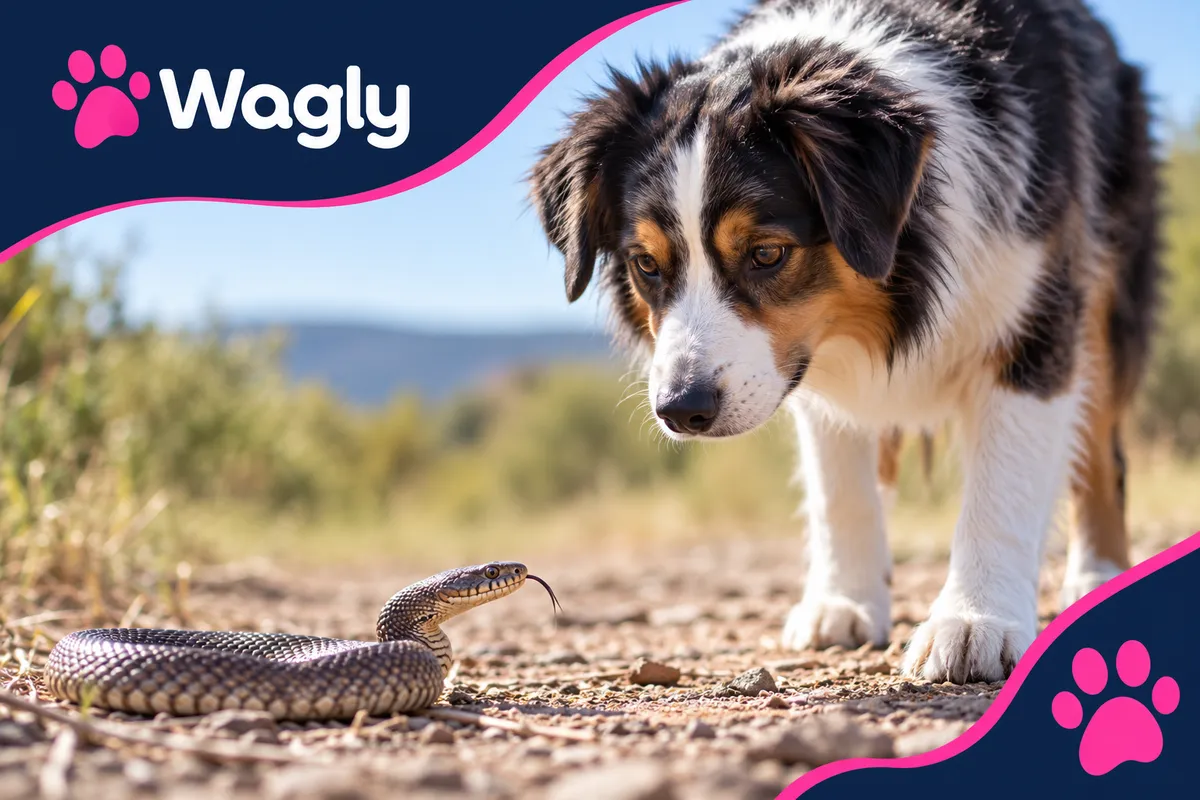
What to Do If Your Dog Is Bitten by a Snake
We love the great Australian outdoors, but sharing it with our unique wildlife means there are some risks every dog owner should know about.
One of those is snakes.
From exploring the backyard to sniffing through long grass on a walk, our naturally curious dogs can sometimes get a little too close.
And when they do, knowing what to do next could save their life.
Australia is home to several highly venomous snake species, and snake envenomation (Envenomation is the process by which venom is injected by the bite or sting of a venomous animal) in dogs is a life-threatening veterinary emergency.
If you see your dog bitten by a snake or suspect they may have encountered one, don't wait for symptoms to appear.
Keep your dog as calm and still as possible, contact your veterinarian or nearest emergency veterinary hospital, and seek veterinary treatment immediately.
What Should You Do Immediately?
When you suspect a snake bite, every minute matters.
Keep Your Dog Still
Your first instinct may be to rush your dog to the car, and you absolutely need to get them to a veterinarian, but try to minimise their physical activity while doing so.
Keep them calm and quiet.
If possible and safe to do so, carry your dog to the car rather than allowing them to walk.
Reducing movement can help slow the movement of venom through the lymphatic system.
Call the Vet
Phone your veterinarian or nearest emergency veterinary hospital and tell them you suspect a snake bite.
Calling ahead allows the veterinary team to prepare for your arrival and, importantly, confirm that appropriate snakebite treatment is available.
Then get moving.
This isn't a situation where you should wait at home and see what happens.
What About a Pressure Bandage?
Australian veterinary guidance indicates that a pressure immobilisation bandage may be used if the bite location is known and it can be applied correctly.
Never use a tourniquet or anything that restricts the blood supply.
Most importantly, don't spend valuable time searching your dog's body trying to locate tiny fang marks before leaving for the vet.
Remove Their Collar if Necessary
If you believe your dog has been bitten around the face or neck, remove their collar in case swelling occurs.
What NOT to Do After a Snake Bite
When you're frightened, it's tempting to try anything that might help.
Unfortunately, some old-fashioned snakebite remedies can waste precious time or cause additional harm.
Don't:
Try to catch or kill the snake.
Waste time searching for the snake.
Cut the bite.
Suck venom from the wound.
Wash or interfere with the bite site.
Apply a tourniquet.
Give human medications unless specifically instructed by a veterinarian.
Wait for symptoms before seeking veterinary help.
Your priority isn't identifying the snake.
It's getting your dog to veterinary care.
If you can safely remember details about the snake without approaching it, that information may be useful, but never put yourself at risk to obtain it.
You May Never See the Bite
One of the frightening things about snake bites in dogs is that you may not know they've been bitten.
Snake fang punctures can be extremely small and difficult to find underneath fur.
Your dog may not cry out.
You may not find swelling.
You may not see a wound at all.
That's why knowing the symptoms is so important.
Signs Your Dog May Have Been Bitten by a Snake
Different snake venoms can affect dogs differently, and symptoms can vary.
Possible signs include:
Sudden collapse.
Collapse followed by what appears to be a recovery.
Weakness.
Wobbliness or an unsteady gait.
Trembling or muscle tremors.
Dilated pupils.
Lethargy.
Vomiting.
Excessive drooling.
Loss of bladder or bowel control.
Abnormal bleeding.
Dark or bloody urine.
Paralysis.
Difficulty breathing.
Unconsciousness.
One particularly dangerous scenario is when a dog collapses and then appears to recover.
Don't assume they're okay.
Australian emergency veterinarians specifically warn that this can occur following serious envenomation.
If your dog has encountered a snake and then behaves unusually, even if they seem better afterwards, seek veterinary attention immediately.
Don't Rely on Identifying the Snake
Was it a brown snake?
A black snake?
A harmless snake?
Trying to identify Australian snakes based solely on colour and appearance can be unreliable.
And getting close enough to have a better look puts you at risk as well.
Don't attempt to catch, handle or kill the snake.
If you're able to observe it safely from a distance, you can tell your veterinarian what you saw. But don't delay treatment or endanger yourself trying to obtain a photograph.
Veterinarians can use clinical assessment and diagnostic testing when investigating suspected snake envenomation.
Reducing Your Dog's Risk of a Snake Encounter
We can't remove every snake from our dog's environment.
We can, however, reduce opportunities for encounters.
Be Careful on Walks
During periods of increased snake activity:
Keep your dog on a lead in higher-risk areas.
Stick to established paths where possible.
Avoid allowing your dog to disappear into long grass or dense scrub.
Don't allow them to investigate holes or areas underneath rocks.
Don't allow your dog to approach a snake, even if it appears dead.
Keeping your dog close gives you much more control if you spot a snake ahead.
Make Your Backyard Less Inviting to Snakes
Snake encounters don't only happen during bush walks.
They can happen at home too.
Around your property:
Keep grass reasonably short.
Remove unnecessary debris and potential hiding places.
Be mindful of wood piles, rockeries and similar sheltered areas.
Control rodents and other potential snake food sources.
Consider appropriate snake-resistant fencing if you live in a particularly high-risk location.
Snakes generally aren't looking for your dog. Reducing food sources and hiding places can make your property less attractive to them.
What If Someone Else Is Walking Your Dog?
This is something worth thinking about before an emergency happens.
If you use a professional dog walker or pet sitter, make sure they have:
Your veterinarian's details.
An emergency contact.
Permission and instructions about what to do if your dog requires urgent veterinary treatment.
Information about any areas you don't want your dog walked.
An understanding of local seasonal hazards.
At Wagly, we believe professional pet care isn't simply about getting your dog out for a walk.
It's about caring for the dog at the other end of the lead.
And that includes knowing what to do when something unexpected happens.
Frequently Asked Questions
What should I do first if my dog is bitten by a snake?
Keep your dog calm and minimise their movement. Contact your veterinarian or nearest emergency veterinary hospital and arrange immediate veterinary treatment. If possible, carry your dog rather than allowing them to walk.
Should I wait for symptoms before going to the vet?
No. If you witnessed a bite or strongly suspect your dog has been bitten, seek veterinary care immediately. Symptoms may not always be immediately obvious.
Should I try to catch the snake?
No. Never risk another bite by attempting to catch or kill a snake. Your priority should be getting your dog safely to veterinary care.
What if my dog collapsed but now seems fine?
Still treat it as an emergency. Collapse followed by apparent recovery is a recognised presentation following snake envenomation in dogs.
Can I see where a snake has bitten my dog?
Not necessarily. Fang marks can be tiny and hidden beneath fur, and the bite site can be difficult to locate. Don't delay veterinary treatment while searching for a wound.
Can a dog survive a snake bite?
Dogs can survive snake envenomation with appropriate veterinary treatment, and getting treatment quickly is important. Emergency veterinary treatment can include antivenom and intensive supportive care depending on the circumstances.
Final Thoughts
Most of us don't want to imagine our dog being bitten by a snake.
But knowing what to do before it happens means you don't have to work it out while you're frightened and your dog needs you.
Remember the essentials:
Keep them calm.
Keep them still.
Call the vet.
Get veterinary help immediately.
Don't waste precious time searching for fang marks or trying to catch the snake.
And when you're enjoying the outdoors with your dog, keep them close, stay aware of your surroundings, and take a few simple precautions to reduce the chance of an encounter in the first place.
At Wagly, we want every adventure with your dog to end the same way, with both of you safely back home.
Because sometimes being prepared for the things we hope never happen is one of the most important parts of being a pet owner.
Related Reading
Ready to explore Wagly? You can access Wagly's features right here on the website or download the Wagly app to keep pet care, pet-friendly places and helpful tools close at hand wherever you and your pet go.
Until next time
The Wagly Team