
AUSTRALIA'S MOST-LOVED PET CARE COMMUNITY
Wagly Blog
Wagly BLog
Understanding Bloat (GDV): A Guide for Dog Owners
As dog owners, we all know our pets can experience an upset stomach from time to time. However, there is one condition that every dog owner should be aware of because it can become life-threatening within hours.
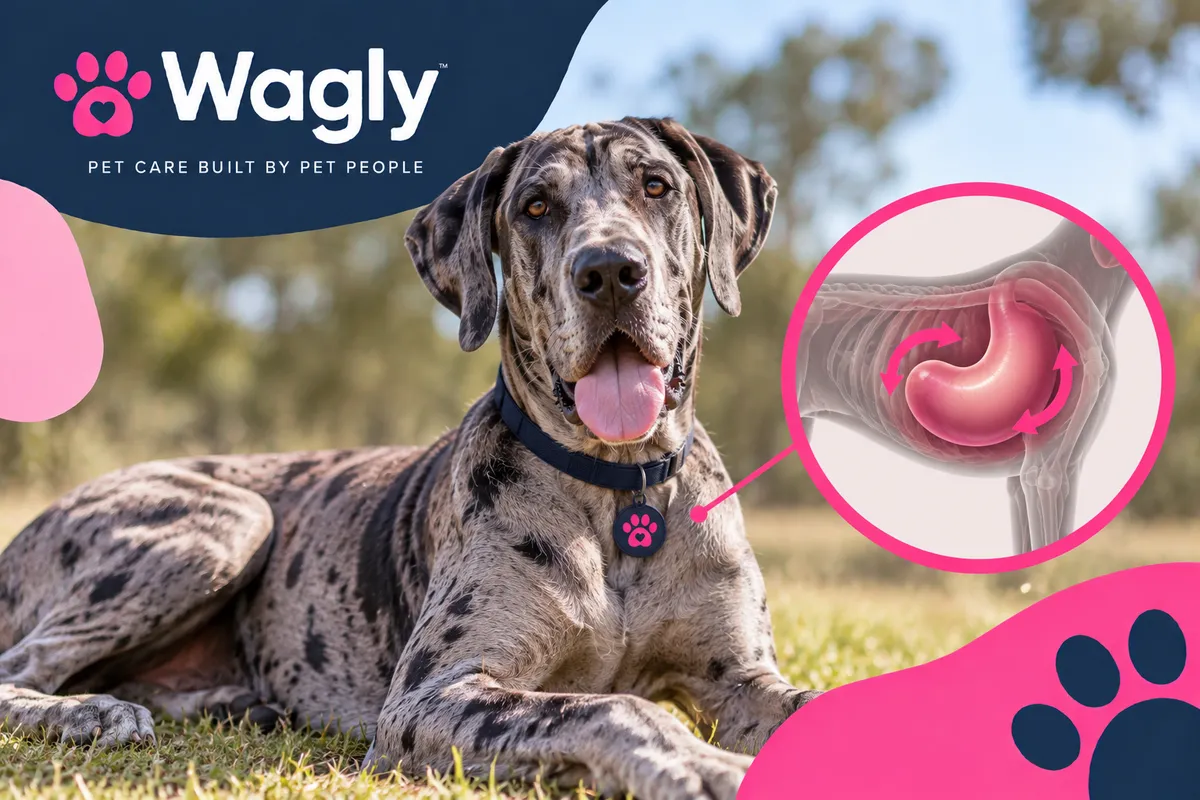
Gastric Dilatation-Volvulus (GDV), commonly known as bloat, occurs when a dog's stomach fills with gas, food, or fluid and then twists on itself. This twist cuts off blood flow, traps the stomach contents, and prevents the body from functioning normally.
GDV is a true veterinary emergency, and recognising the early signs could save your dog's life.
What Happens During Bloat?
Bloat usually develops in two stages.
Stage 1: Gastric Dilatation (Simple Bloat)
This is when the stomach expands due to a build-up of gas, food, or fluid.
As the stomach stretches, it creates pressure inside the abdomen, causing discomfort, pain, and difficulty breathing.
Simple bloat may sometimes resolve, but it can quickly progress into a much more dangerous situation.
Stage 2: Volvulus (The Twist)
This is the most serious stage.
The enlarged stomach rotates, trapping the gas and contents inside. The twist also restricts blood flow to the stomach and other vital organs.
Without urgent veterinary treatment, GDV can quickly become fatal.
Signs of Bloat Every Dog Owner Should Know
Bloat can progress rapidly, so never adopt a "wait and see" approach.
Contact an emergency veterinarian immediately if your dog shows any of the following signs:
Trying to vomit but bringing nothing up (dry retching)
A swollen, hard, or tight stomach
Excessive drooling or foaming at the mouth
Restlessness, pacing, or an inability to get comfortable
Whining or signs of pain
Rapid breathing
Pale gums
Weakness or collapse
Even if you are unsure, it is always safer to have your dog assessed immediately.
What Should You Do If You Suspect Bloat?
If you think your dog may be experiencing bloat:
Stay calm and call your nearest emergency veterinary clinic immediately.
Do not wait to see if your dog improves.
Do not attempt to give food, medication, or home remedies.
Transport your dog to the clinic as quickly and safely as possible.
Every minute matters when it comes to GDV.
Which Dogs Are Most at Risk?
While any dog can develop bloat, the risk is significantly higher in large, giant, and deep-chested breeds.
Some commonly affected breeds include:
Great Danes
German Shepherds
Weimaraners
Standard Poodles
Doberman Pinschers
Boxers
Rottweilers
Other factors that may increase the risk include:
Having a parent or sibling with a history of GDV
A nervous or anxious temperament
Eating too quickly
Eating one large meal per day
Using elevated food bowls
Certain types of dry food with high fat content near the top of the ingredient list
How Can You Reduce the Risk of Bloat?
Although there is no guaranteed way to prevent GDV, these steps may help reduce your dog's risk:
Feed Smaller Meals
Instead of feeding one large meal per day, divide your dog's food into two or three smaller meals.
Slow Down Fast Eaters
If your dog gulps their food, consider using a slow feeder bowl or puzzle feeder.
Avoid Heavy Exercise Around Mealtimes
Avoid vigorous running, jumping, or intense play for one to two hours before and after meals.
Monitor Water Intake
Allow your dog access to fresh water at all times, but discourage excessive gulping of large amounts of water immediately after eating or intense exercise.
Preventative Surgery for High-Risk Dogs
For dogs at a high risk of developing GDV, your veterinarian may recommend a procedure called a gastropexy.
A gastropexy involves securing the stomach to the abdominal wall to prevent it from twisting.
Many owners of large and giant breeds choose to discuss this procedure with their veterinarian at the same time their dog is desexed.
Frequently Asked Questions
How quickly can bloat become dangerous in dogs?
Bloat can progress extremely quickly, sometimes within a matter of hours. This is why any signs of GDV should be treated as a veterinary emergency.
Can small dogs get bloat?
Yes. Although GDV is more common in large, deep-chested breeds, any dog can potentially develop bloat.
Will my dog still be able to pass gas or vomit if they have bloat?
Often, dogs with GDV will repeatedly try to vomit but will produce little or nothing. This unproductive retching is one of the most recognisable warning signs.
Can bloat happen while a dog is being cared for by a pet sitter?
Yes. This is why it is important to choose a knowledgeable pet sitter who understands emergency signs and has a clear plan for seeking immediate veterinary care.
Final Thoughts
Bloat is one of the most serious emergencies a dog owner can face, but knowledge can make all the difference.
Understanding the warning signs, knowing which dogs are most at risk, and acting quickly can potentially save your dog's life.
At Wagly, we believe great pet care is about more than feeding and walking. It is about recognising when something is wrong and responding quickly when our pets need us most.
Whether your dog is at home, with a pet sitter, or enjoying time away from you, choosing experienced pet care professionals who understand your dog's individual needs provides invaluable peace of mind.
Related Reading
Ready to explore Wagly? Access Wagly’s features right here on the website, or download the Wagly app to keep pet care, pet-friendly places and helpful tools close at hand wherever you and your pet go.
Until next time
The Wagly Team


Real pet lovers, right in your neighbourhood.
© 2026 Wagly. All rights reserved.
Privacy · Terms