
AUSTRALIA'S MOST-LOVED PET CARE COMMUNITY
Wagly Blog
Wagly BLog
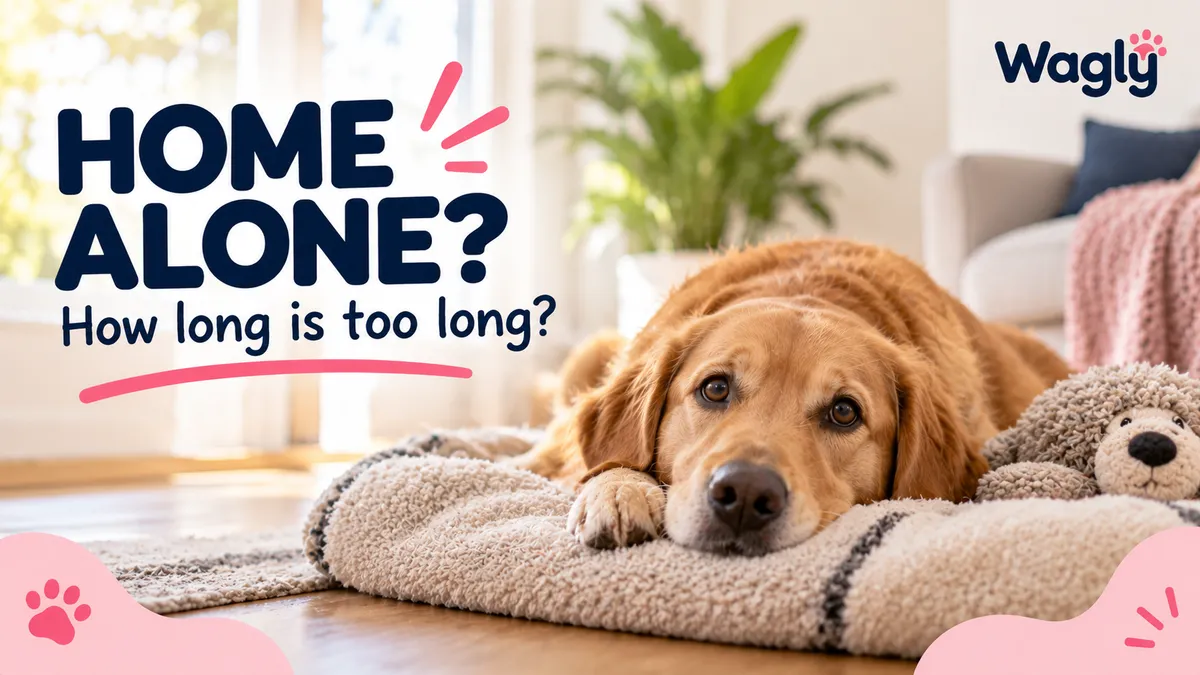
Can You Leave Your Dog Home Alone? How Long Is Too Long?
Most dogs will need to spend some time home alone.
You might be heading to work, running errands or simply going somewhere your dog can't come with you.
But how long is too long?
There isn't one answer that suits every dog. Age, health, personality, routine and how comfortable your dog is being alone can all make a difference.
Here's what to consider before heading out for the day.
How Long Can a Dog Be Left Alone?
Some adult dogs are comfortable spending several hours alone, while others may struggle much sooner.
Rather than focusing on one strict number, think about your dog's:
Age
Toilet needs
Health
Activity level
Usual routine
Experience being left alone
Behaviour when you're away
A dog being physically able to hold their bladder doesn't necessarily mean they're comfortable being left alone for that long.
Regular toilet breaks, exercise, interaction and mental stimulation are all important parts of their day.
Puppies
Puppies need much more attention than adult dogs.
They need regular toilet breaks, meals, play, rest and opportunities to learn about the world around them.
Young puppies generally can't be expected to spend long periods home alone.
If you're working during the day, arranging someone to visit can help break up the time and give your puppy a toilet break and some company.
As they get older, you can gradually build up the amount of time they spend alone.
Adult Dogs
Healthy adult dogs can usually manage longer periods alone than puppies, but that doesn't mean every dog will be comfortable with a full working day by themselves.
Think about what happens during those hours.
Have they had a walk?
Can they comfortably go to the toilet?
Do they have somewhere safe to rest?
Are they relaxed when you leave?
For dogs regularly spending longer periods at home, a midday walk or visit can make a big difference to their routine.
Senior Dogs
Older dogs may need their routine adjusted again.
Some senior dogs need more frequent toilet breaks, medication or simply an opportunity to get up and move around during the day.
Others may be perfectly happy snoozing for several hours.
Watch your individual dog rather than assuming their needs are the same as they were a few years ago.
A shorter, gentle visit during the day may be enough to give them a toilet break, some company and a little movement.
Signs Your Dog May Be Struggling
Your dog can't tell you they've been home too long, but their behaviour can give you clues.
Look out for:
Toileting accidents
Excessive barking, whining or howling
Destructive chewing
Scratching around doors or windows
Pacing
Difficulty settling
Changes in behaviour when you prepare to leave
These behaviours don't automatically mean your dog has been left alone for too long.
They can have several causes, including separation-related problems, boredom or medical issues.
If the behaviour is new, severe or ongoing, speak with your vet or an appropriately qualified behaviour professional.
Use a Pet Camera
Wondering what your dog actually does after you walk out the door?
A pet camera can give you some useful information.
You may discover they curl up and sleep shortly after you leave.
Or you might notice pacing, barking, whining or difficulty settling.
Checking their behaviour can help you understand how they're coping rather than guessing.
Give Them Something to Do
Before leaving, consider providing some safe enrichment.
Depending on your dog, this might include:
A suitable food puzzle
A snuffle mat
A safe chew
Hidden treats
A favourite toy
Only leave toys or enrichment products that are safe for your particular dog to use without supervision.
A walk before you leave can also help allow your dog to exercise, sniff and go to the toilet.
Break Up Their Day With a Dog Walker
If you're away for longer periods, you don't necessarily need to rearrange your entire day.
A dog walker can visit midway through the day and give your dog a walk, toilet break and some company.
Even a 30-minute visit can break up a long stretch at home.
Through Wagly, pet owners can find local dog walkers and other pet care providers to suit their dog's routine.
Consider Doggy Daycare
Some dogs enjoy spending part of their week at doggy daycare.
It can provide exercise, interaction and a change from spending the whole day at home.
But daycare isn't right for every dog.
Consider your dog's personality, age, health and how comfortable they are around other dogs before deciding whether it's a good fit.
Arrange a Pet Sitter or Home Visit
Sometimes your dog doesn't need a full day of care.
They just need someone to pop in.
Home visits can be particularly useful for puppies, senior dogs or pets that need additional care during the day.
A pet sitter might provide a toilet break, meal, medication where appropriate, playtime or simply some company.
Finding Help Through Wagly
Life doesn't always fit neatly around your dog's routine.
That's where having reliable pet care nearby can help.
Through Wagly, pet owners can find services including:
Dog Walking & Exercise
Find local dog walkers for regular or occasional walks when you can't get home.
Pet Sitting & Home Visits
Arrange someone to check in, provide company and help maintain your pet's normal routine.
Doggy Daycare & Boarding
Explore care options for dogs that need more company or supervision while you're away.
Grooming, Training & Other Pet Services
Find local pet professionals for the other parts of your pet's care.
The right option depends on your dog and what they need.
Every Dog Is Different
There's no stopwatch that tells you exactly how long your dog should be left alone.
One dog might happily snooze while you're gone. Another may become unsettled much sooner.
Look at your dog's age, health, routine and behaviour.
And if you're regularly away for long periods, consider whether a walk, home visit or pet sitter could make their day a little easier.
Because sometimes breaking up a long day is all they need.
FAQs
Can I leave my dog alone while I'm at work?
Some adult dogs cope well with being home alone for part of the working day, while others need additional breaks or company. Consider your dog's age, health, toilet needs and behaviour when deciding what's appropriate.
How long can a puppy be left alone?
Young puppies need frequent toilet breaks, meals and interaction, so they shouldn't be expected to spend long periods alone. The amount of time can gradually increase as they mature.
How do I know if my dog is unhappy when left alone?
Signs can include barking, whining, pacing, toileting accidents, destructive behaviour or difficulty settling. A pet camera can help you see what your dog does while you're away.
Should I get a dog walker if I work full-time?
A dog walker can be useful if your dog would benefit from a toilet break, exercise and interaction during a longer day at home.
Is doggy daycare better than leaving my dog at home?
It depends on the dog. Some dogs enjoy daycare, while others are happier at home with a midday walk or pet sitter. Consider your dog's personality, health and comfort around other dogs.
Related Reading
Dog Enrichment Ideas for Every Age: Puppies to Seniors
How Often Does Your Dog Really Need a Walk?
Dog Enrichment Ideas for Every Age
Understanding Bloat (GDV): A Guide for Dog Owners
Ready to explore Wagly? Access Wagly’s features right here on the website, or download the Wagly app to keep pet care, pet-friendly places and helpful tools close at hand wherever you and your pet go.
Until next time
The Wagly Team


Real pet lovers, right in your neighbourhood.
© 2026 Wagly. All rights reserved.
Privacy · Terms